phdream Probability in Casino Games
Mastering phdream Probability in Casino Games: An Advanced Strategy Guide
For the discerning player in the PH Market, understanding probability is not merely an academic exercise; it's a cornerstone of advanced casino strategy. While many players rely on intuition or luck, the truly strategic individual knows that every spin, every hand, and every roll in phdream Casino Games is governed by mathematical principles. This advanced guide aims to demystify these principles, offering experienced users the tools to make more informed decisions, manage their bankroll effectively, and ultimately, enhance their overall gaming experience on a Mobile-first platform. We'll delve beyond basic odds, exploring concepts like expected value, variance, and how to apply these insights across various phdream offerings, from slots to live dealer tables. Prepare to transform your approach from hopeful wagering to calculated strategy, all within the convenience of your mobile device.
Table of Contents:
- Understanding the Fundamentals: House Edge, RTP, and Variance
- Advanced Probabilistic Calculation Techniques for Strategic Play
- Applying Probability: Strategic Insights for Popular phdream Casino Games
- The Limits and Advantages of Probability in Casino Gaming
- Leveraging Data and Analytics for an Optimized phdream Experience
Understanding the Fundamentals: House Edge, RTP, and Variance
At the heart of all Casino Games lies probability, manifesting through concepts like House Edge, Return to Player (RTP), and Variance. For advanced players on phdream, a deep understanding of these elements is crucial. The House Edge represents the casino's statistical advantage over players, expressed as a percentage of the player's initial bet. For instance, a game with a 2% house edge means that, over the long run, the casino expects to keep 2 cents for every dollar wagered. This is the fundamental reason why the casino always wins in the long run.
Return to Player (RTP) is simply the inverse of the house edge, indicating the percentage of all wagered money that a slot machine or casino game is programmed to pay back to players over time. An RTP of 96% means that for every ₱100 wagered, the game is expected to return ₱96 to players. Advanced players always seek games with higher RTPs, as this statistically reduces the long-term cost of play. phdream, catering to the PH Market, often provides transparent RTP information for its games, a feature savvy players should always utilize.
Variance (or Volatility), on the other hand, describes the risk level associated with a game. High variance games tend to pay out less frequently but with larger amounts, while low variance games offer more frequent, smaller wins. Understanding variance is critical for bankroll management. A player with a smaller bankroll might prefer low variance slots to extend playtime, while a player chasing big jackpots might opt for high variance games. On a Mobile-first platform like phdream, quick access to game information allows players to make these strategic choices on the go. These three metrics, when analyzed together, form the bedrock of an advanced probability strategy, moving beyond mere luck to calculated decision-making.
Advanced Probabilistic Calculation Techniques for Strategic Play
Moving beyond the basics, advanced players engage with more sophisticated probabilistic concepts to gain an edge, or at least minimize the house's advantage. Key among these are Expected Value (EV) and Conditional Probability. Expected Value is a long-term average of the outcome of a probabilistic event. In casino terms, a positive EV means that, over many trials, you expect to profit, while a negative EV means you expect to lose. Most Casino Games inherently have a negative EV for the player due to the house edge, but strategic play can sometimes shift this for specific decisions within a game.
For instance, in Blackjack on phdream, using basic strategy is essentially playing with the highest possible EV for each decision. Advanced players might consider card counting (though largely ineffective in online RNG games due to frequent shuffling) or deviations from basic strategy in specific scenarios in live dealer games. Understanding Conditional Probability is vital here – how the probability of an event changes based on prior events. For example, in poker, knowing the cards already dealt helps you calculate the probability of hitting your flush or straight.
Another crucial concept is Bayes' Theorem, which allows for the updating of probabilities based on new evidence. While complex to apply in real-time for most games, the underlying principle – continuously refining your assessment of probabilities as new information emerges – is invaluable. For players in the PH Market utilizing phdream's Mobile-first interface, the ability to quickly reference strategy charts or mental models for EV and conditional probabilities can significantly impact their decisions, transforming impulsive bets into calculated risks. This level of engagement moves the player from a passive participant to an active strategist.
Applying Probability: Strategic Insights for Popular phdream Casino Games
Translating theoretical probability into actionable strategy is where advanced players truly excel on phdream. Each game type presents unique probabilistic challenges and opportunities:
Slots and Arcade Games
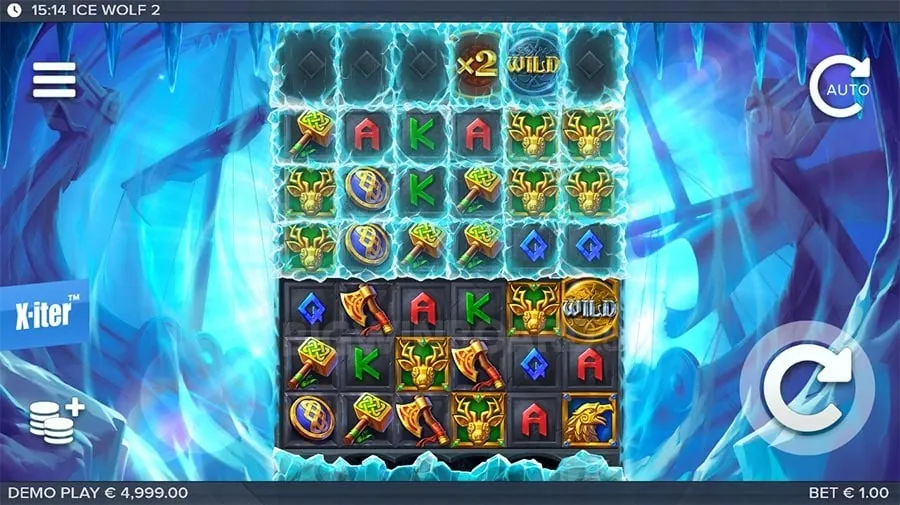
For slots, while individual spins are independent events governed by RNGs, strategic probability lies in understanding RTP and variance. Players should research the RTP of specific phdream slots and choose games that align with their bankroll and risk tolerance. High RTP slots offer better long-term returns, while understanding variance helps manage expectations – high variance for chasing big wins, low variance for extended play. The Mobile-first design of phdream makes it easy to switch between games based on these factors.
Blackjack
Blackjack is one of the few Casino Games where player decisions significantly alter the house edge. Adhering to basic strategy is paramount, reducing the house edge to typically less than 1%. Advanced play involves understanding the probabilities of specific outcomes (e.g., probability of busting with another card) and making informed decisions on hitting, standing, splitting, or doubling down. While online Blackjack often uses continuous shufflers, making traditional card counting obsolete, understanding the underlying probabilities of card distribution still guides optimal play.
Roulette
Roulette is a game of fixed odds. The probabilities of landing on a specific number, color, or section are constant. Advanced strategy here involves understanding the difference between European (single zero, lower house edge) and American (double zero, higher house edge) roulette, and choosing the former on phdream whenever possible. While no strategy can overcome the house edge, intelligent betting patterns (e.g., covering a larger portion of the table with lower-payout bets) can manage variance and extend playtime.
Baccarat
Baccarat offers some of the lowest house edges among Casino Games. The Banker bet, despite the commission, has a slightly better probability of winning than the Player bet. Advanced players on phdream understand these fixed probabilities and consistently bet on the Banker, making it a statistically sound choice. The Tie bet, with its high payout but extremely low probability, is generally avoided by advanced strategists.
Poker (Video Poker/Live Poker)
Poker, especially variants like Video Poker, offers some of the best opportunities for probability-based strategy. Video Poker games often have RTPs exceeding 99% with optimal play. Advanced players memorize or use strategy charts to determine the best decisions (which cards to hold/discard) based on the probabilities of forming winning hands. In live poker, understanding pot odds, implied odds, and opponent probabilities (e.g., bluffing frequency) is crucial for long-term success. phdream's live casino options provide an excellent environment for applying these advanced poker strategies.
The Limits and Advantages of Probability in Casino Gaming
While understanding probability offers significant advantages, it's crucial for phdream players to recognize its limitations. The primary limitation is the inherent House Edge. No amount of probabilistic analysis can eliminate the casino's long-term advantage in most games. Probability helps you make the *best possible* decision given the odds, but it doesn't guarantee a win on any single session or even a series of sessions. Short-term outcomes are always subject to randomness and variance.
The Random Number Generators (RNGs) used in online Casino Games ensure that each event is independent and unpredictable. This means past results do not influence future outcomes (e.g., a slot machine that hasn't paid out in a while is not